


This essay contains references to suicide.
March marks fifteen years since my children's birth mother ended her life. This essay is a reflection written from inside that anniversary… not as closure, but as an honest account of what the body carries when it chooses to stay. It is one of the most vulnerable pieces I've written … close to my heart. These thoughts have been looking for a place to land for a very long time.
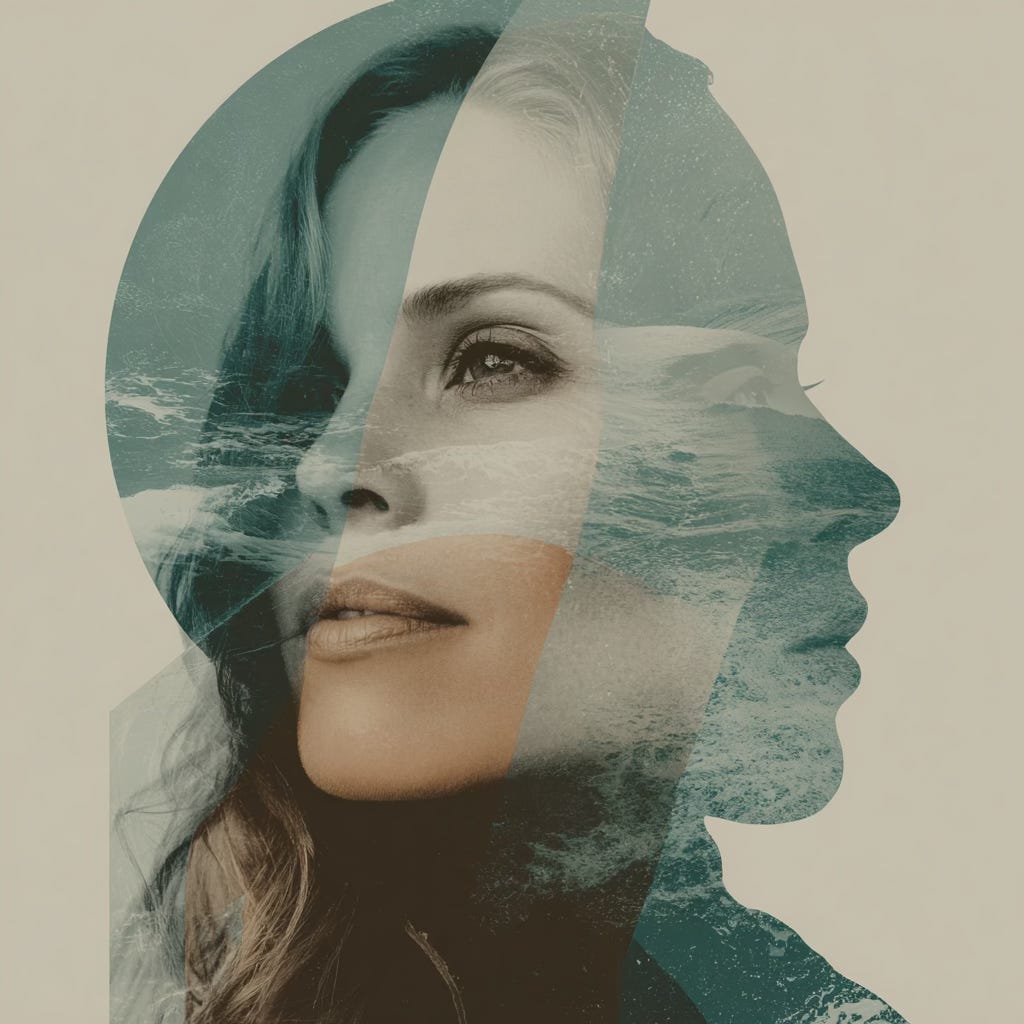
When I turned sixteen, my parents gave me a painting.
They had commissioned a local artist to reproduce John William Waterhouse’s Ophelia, the 1910 version, the one in which she is draped in a blue dress, her long red hair loose and falling, wildflowers gathered in her hands. She is not yet in the water in this painting. She is standing at the edge of it.
What Waterhouse captured is the moment just before: the stillness that precedes descent, the expression of a woman who has already made her decision but whose body has not yet carried it out. There is something in her eyes that is neither peace nor panic. It is closer to resignation rendered as beauty, as if suffering becomes its own kind of composure.
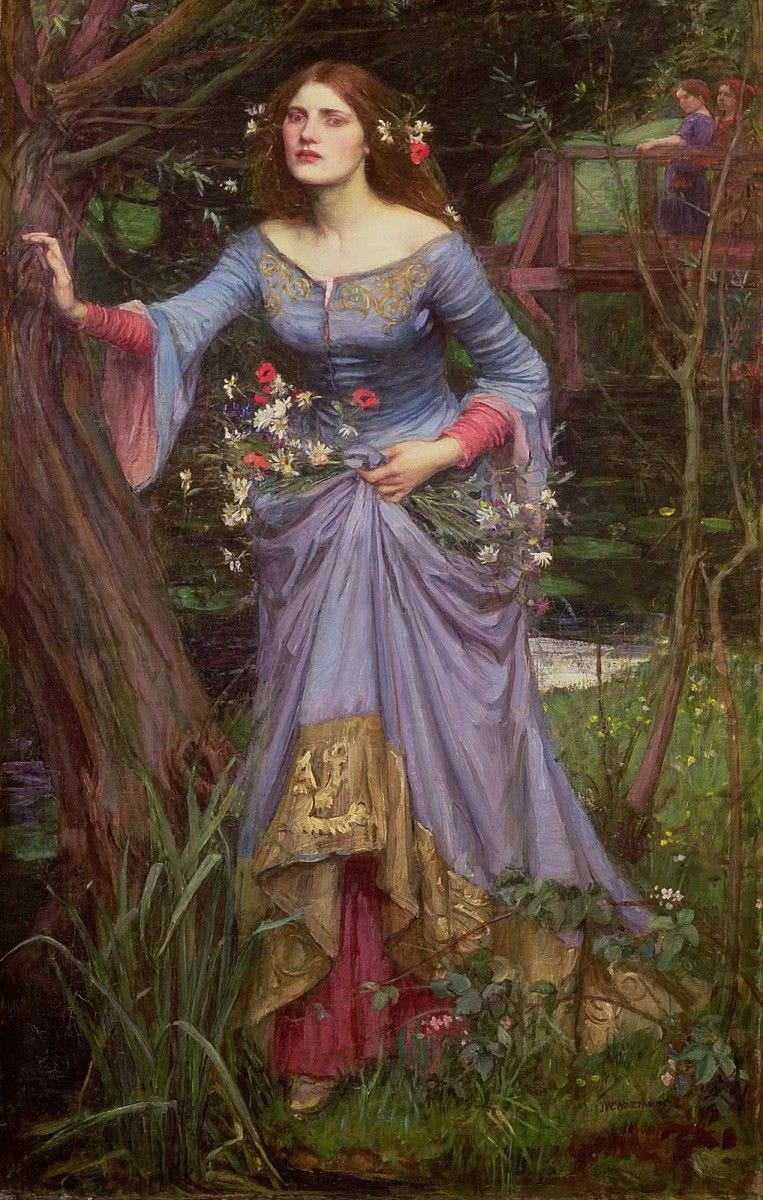
I loved that painting. It hung on the wall above my bed, among posters of Eddie Vedder, Fiona Apple and Nirvana. It felt dangerous and beautiful all at once. I didn’t know what I was drawn to. I didn’t know I was rehearsing.
Ophelia has stood for four centuries as an emblem of feminine grief. She is a woman who descends into madness and ultimately into water, who gets no soliloquy… no moment of clarifying speech. She doesn’t get to explain herself the way the men around her do. She gets fragments instead: flowers, songs, pieces of meaning that make sense only to the body. Her language is far from an argument rather I see it more as symbols: rosemary for remembrance, rue for regret, the slow current of a river. She lives in the borderlands between life and death, in the space where the mind has already traveled somewhere the body has yet followed. For all these centuries, she has been the image we reach for when a woman’s suffering exceeds the language available to hold it.
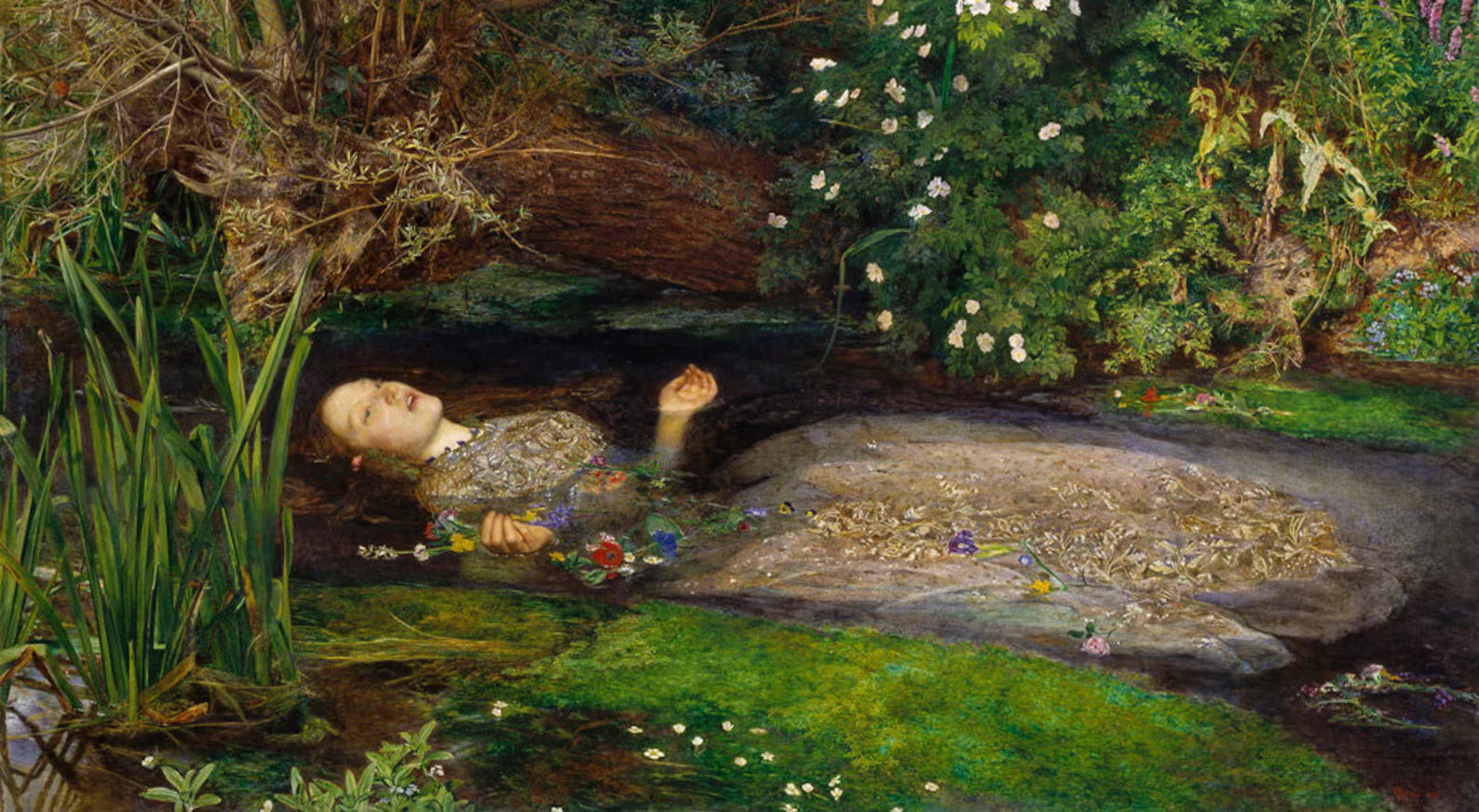
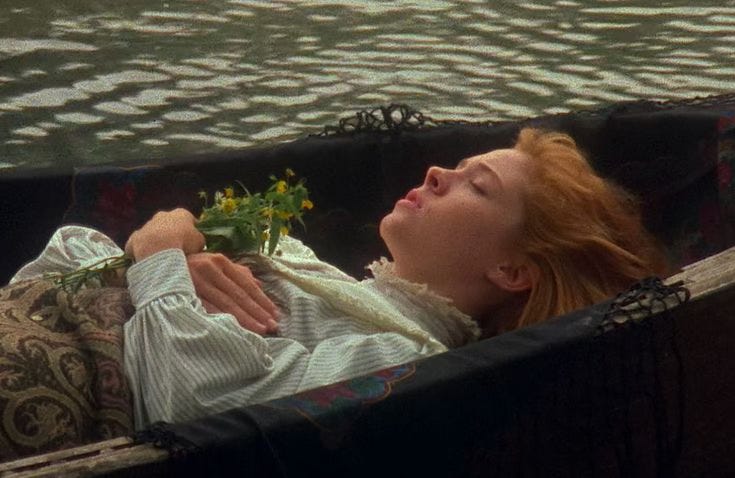
I didn’t know any of this at sixteen. I only knew the painting made something inside me ache.
Many years later, I married a man whose first wife, Andrea, had ended her life. She left behind four children that would become mine. The youngest, the one who had no words for any of it, whose body held what language could not, is named Ophelia. We call her Fefe. In the Berber language, Fefe is known as “The Sweet One”.
Some patterns are too large to see from the inside. You can only sense them the way you sometimes sense the shape of a river… not from the bank, where you are standing in it, but from the air, if you are ever given the grace of that altitude.
I was not given that altitude. I was given a house.
There are houses that hold more than one woman’s absence. I don’t mean haunted. I mean that the air behaves differently in a house where someone is missing (at least it did for me) .. where someone has been missing for a long time. It thickens at certain thresholds. It carries sound in ways you learn to read without realizing you’re reading them. After enough years, your body stops distinguishing between listening and living.
I have lived in such a house for fourteen years. It shows in the smallest things: the way I check the locks before bed, the way I clean up the kitchen in the half-light after everyone is asleep, moving through the house with a certainty that has nothing to do with thought and everything to do with the kind of attention that has settled so deep into my bones I no longer recognize it as effort. I used to think this was just mothering. I think now it might be something closer to sonar: it’s a constant, low-frequency sweep of the rooms and the people in them, looking for what I cannot name but have learned, over time, never to stop tracking.
This month marks fifteen years since Andrea ended her life.
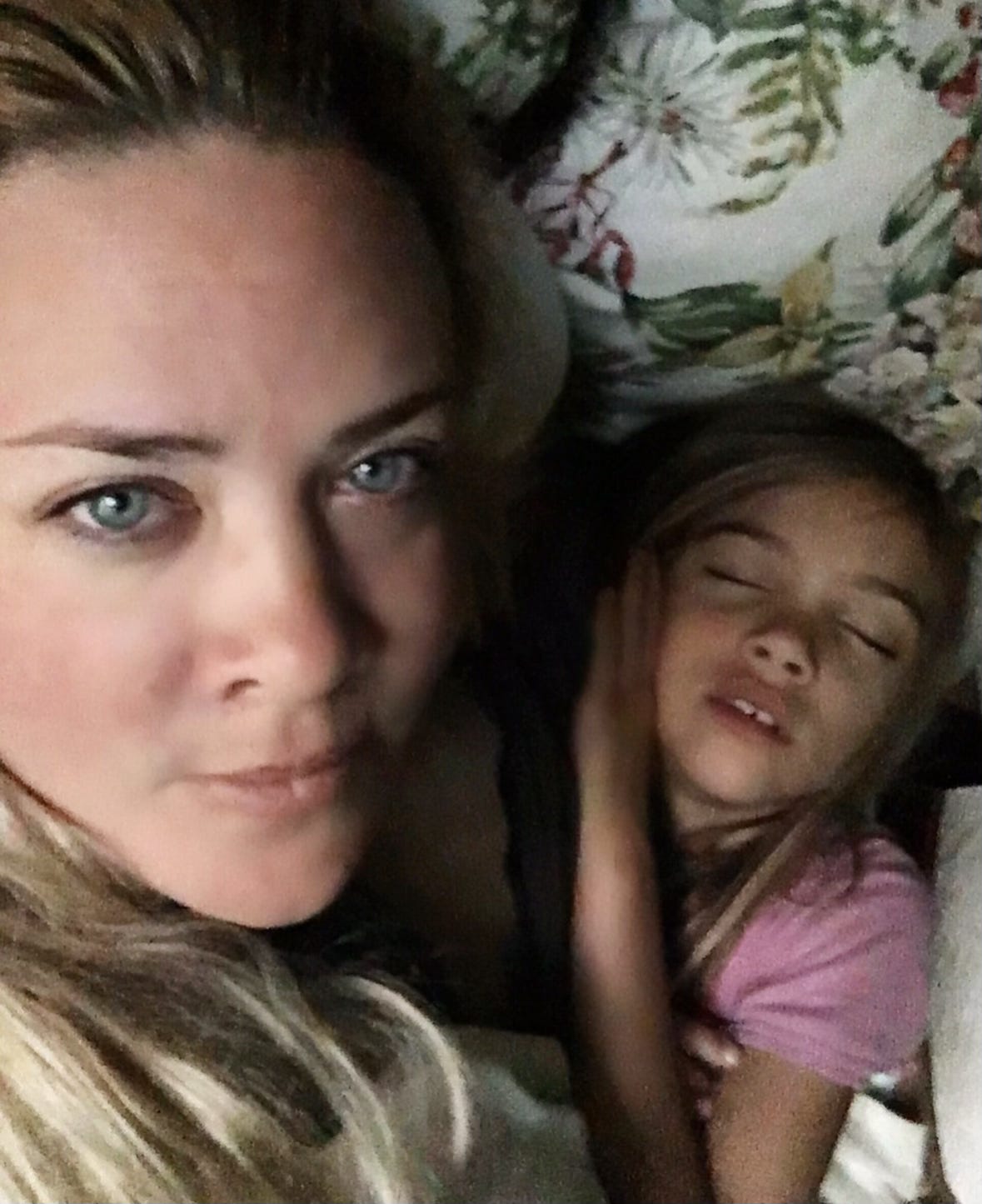
I can’t believe that much time has passed. I still remember with such a visceral memory of those early years. Someone had given my youngest son a pillow with her face on it. He would cry himself to sleep, clutching the pillow with her smiling face. My youngest struggled with self soothing - she’d lock her body and cry. No woman could hold her. I was awkward with toddlers who need a mother’s nurture, yet I held her, as she screamed in my ear until I felt her body relax.
This month, as the anniversary came around, I had different conversations with the kids about Andrea, about her life. It’s a strange thing to have conversations about a woman you never knew but look at almost daily in the features of your grown kids.
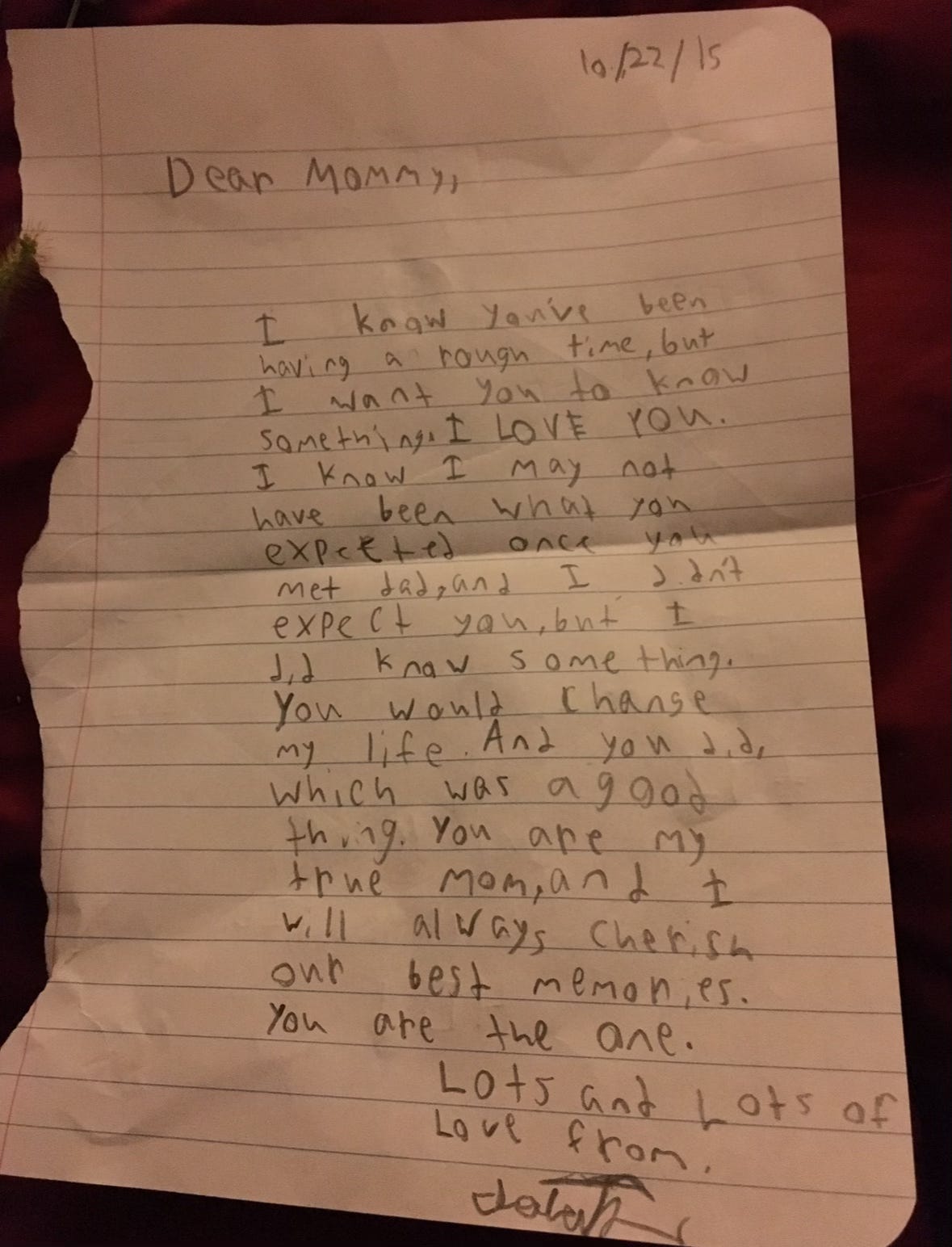
My oldest daughter gave birth to her third son a few weeks ago. She’s in the thick of it: family visiting, meals to plan, her body still healing while the house fills with the needs of everyone around her. In the middle of all that beautiful exhaustion, she took the time to write to me. She said it took two women to make her who she is. Her mother. And me.
I have been sitting with that sentence.

I have been thinking, too, about what it means to be the second woman.. the one who did not start the story but walked into it and stayed.
Who said yes to not one man but also four motherless children. They say that in an earthquake, the aftershocks often do more damage than the initial rupture. Not the breaking itself, but the long instability that follows: structures still standing but no longer sound, the ground shifting in ways you can feel but not predict.
What I walked into was the aftermath: four children carrying a loss none of them had the language for, a house with a presence so specific it had weight, and no map for any of it except the one I would have to make by hand, in the dark, by feel.
I reveal none of this as a badge of honor or some hard fought accomplishment. It’s a truth I’ve lived rather spoken … something I, too haven’t hard words for, but has lived in my body. Henri Nouwen wrote that those who can sit with the suffering of others without fleeing into easy answers are the ones whose own wounds have taught them where healing actually begins: not in solutions, but in presence.
Early on, when we were pressed against the glass of suicide I had no empathy when some well-known celebrity ended their life and someone would say that their battle with mental health had won. I know now what I didn’t know then: that the language around it almost never fits, that the people closest to the loss are the last ones the public language is written for.
Suicide does not stay in the past tense. It leaks. It seeps. It pools. It gets into kitchens and calendars and the way you hold your breath, almost imperceptibly, when your teen doesn’t answer a text message fast enough after they’ve confessed struggling.
It trains the body to live with a question that runs just beneath the surface of every ordinary day: Will everyone make it through this?
And when someone dies this way, their pain does not end with them. That is the cruelest part. The pain survives the person. It becomes shrapnel, lodged in the bodies of everyone left living, reshaping itself in each one differently, according to what that body can bear. Time does not heal all wounds. It only reshapes them within you.
I know Andrea only through what she left behind, and what she left behind is not the kind of thing that fits in a box. It’s your children’s face. One has her smith, another has her eyes and thick hair. Another has her talent for music. It’s also atmospheric. It lives in the way questions surface in the kids without warning. It lives in the way tenderness can tighten mid-breath into something that feels more like fear than love, though it is love. It has always been love, just love that has learned to keep one hand on the railing.
And I know her through the immovable fact that love does not always keep a body alive.
That knowledge rearranges everything. It changes how you mother. It changes how you listen. It changes how you enter a room and what your nervous system decides, without consulting you, to track. Love becomes a form of listening that never quite turns off.
I did not choose this grief. But I chose to stay inside it, and that choice has shaped my body in ways I am only now beginning to understand.
An early memory: I am standing outside in the dark with my oldest daughter after she had fought with her dad. Back then, her grief revealed itself in rebellion and chaos that caused sparks to fly and sometimes furniture. We stood there as she cried. I didn’t know what to do but to be present. We walked in silence to my car and went for a drive. She cried and I listened with a silence with an aching heart.
Every March 17th (the day of Andrea’s death) I would do something different with the kids. Sometimes they wrote notes or drew pictures to Andrea, tying them to balloons, all of us standing in the yard watching them catch the wind and rise until they were gone. One anniversary, I remember stuffing notes in bottles and tossing them toward the Caribbean Sea. All of these acts an attempt at giving grief a body and a direction.. something you could hold in your hands and then release with your hands.
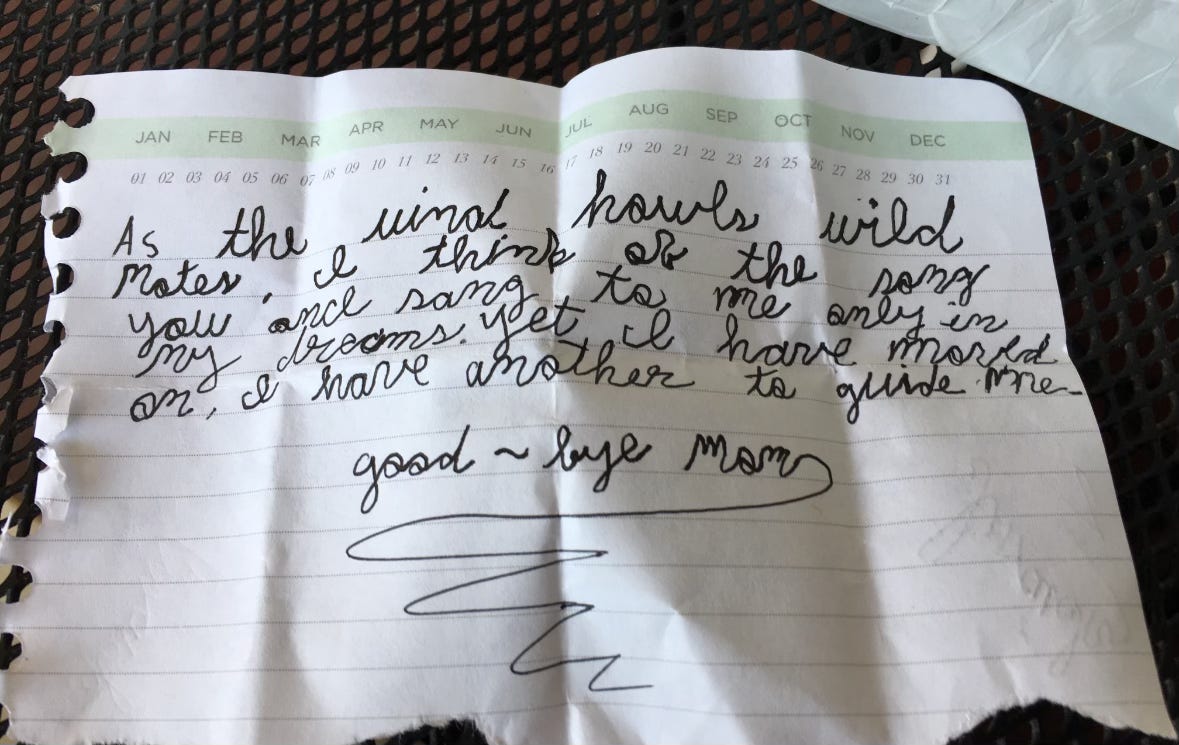


These were not strategies. They were small rituals of presence, sometimes made up on the spot, offered because I didn’t know what else to offer except the fact of being there and that she had a life and is still a present in her memory.
What I didn’t know was that the kids were watching with careful attention.
My oldest told me recently that she and her brother used to talk at night about whether the safety I had brought into the house was real… whether the steadiness would hold, or whether it was a performance designed to earn their trust before it, too, disappeared.
They decided to wait and see.
It held. It is still holding.
Much of what we understand about trauma comes from studying rupture… moments of acute crisis, where the body is overwhelmed by a single, undeniable threat. The language that followed makes sense there: fight, flight, freeze, restore the system to baseline.
But some lives are not organized around rupture. Instead, some lives are shaped by what never resolves… by a grief that has no edges, no climax, no moment you can point to and say there, that is where it began to get better.
Some bodies were never given the option of fighting back or fleeing. Some bodies learned something else entirely:
Stay.
Hold the room.
Read the emotional weather before it turns. Make adjustments so subtle no one notices the temperature was ever in danger of shifting. I learned this not from a book but from a house where four kids carried a grief they could barely articulate, where their dad withdrew in order to survive his own storms, and where the only person available to hold the center steady was the woman who had walked in after the worst had already happened.
My nervous system did not learn fight or flight. It learned something older, less visible, and far more costly: Stay. Absorb. Anticipate. Do not leave.
This is not hypervigilance born of fear. It is vigilance born of love.
And love, when it becomes a long-term survival strategy, does something very particular to a body. It keeps you upright. It keeps you functioning. It leaves you so steadily, quietly depleted that you begin to mistake the cost for who you are.
No one prepares you for this.
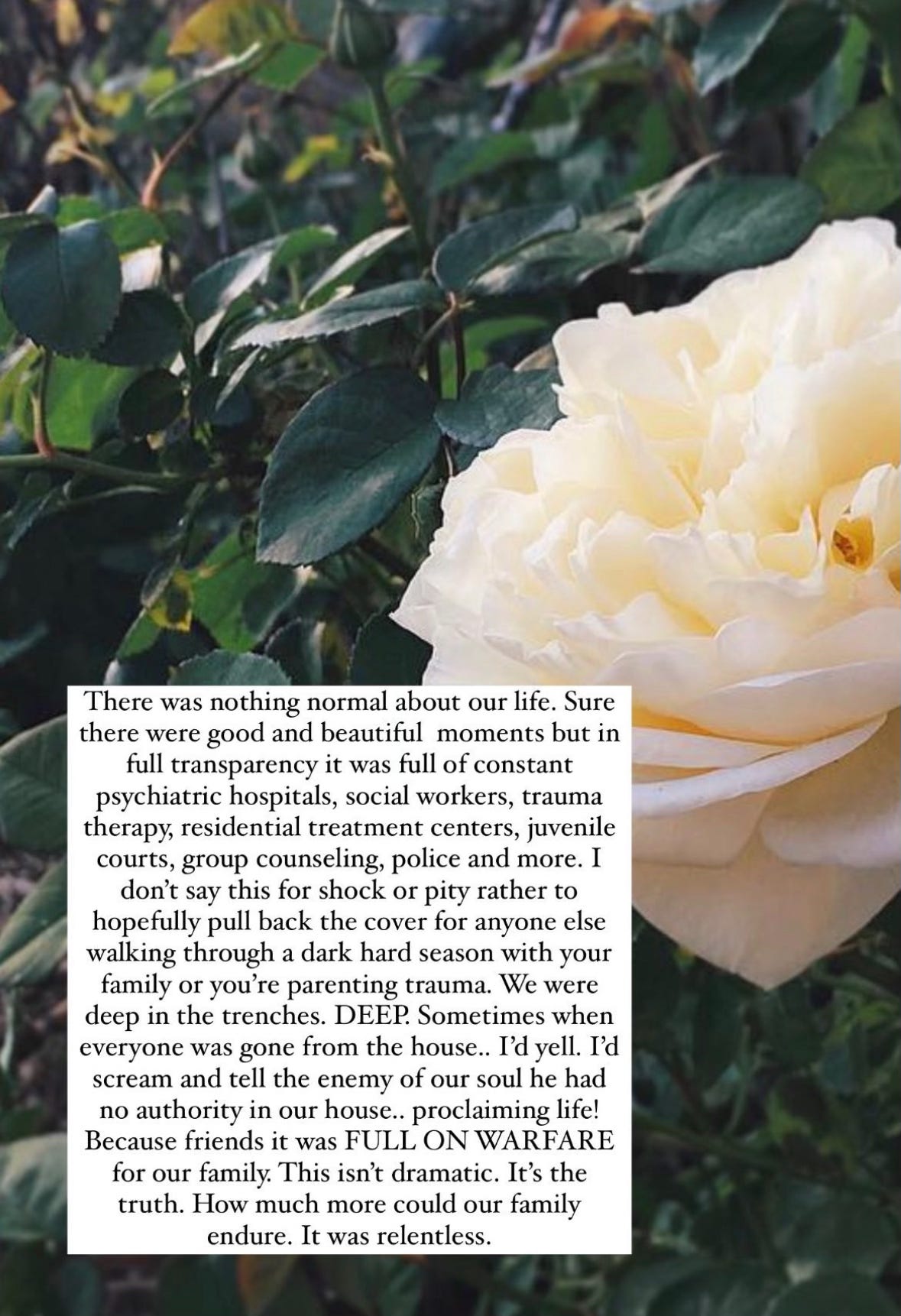
A woman’s body is not static. It is tidal. It moves in rhythms… hormonal, seasonal, lunar … that no framework has fully learned how to read. Some seasons I can hold everything. And other seasons the same weight is unbearable. Women, we understand this as it lives in our body. The body moves through time and what it can carry shifts.
When grief without edges enters that system, it does not behave like a wound that can be stitched and healed. It behaves more like a change in atmospheric pressure: something invisible, total, felt everywhere and nowhere at once.
And when the grief belongs to another woman.. one who could not stay.. it lands with a force that is not identification. It is warning and vow at once.
Somewhere in my body, long before I understood or had words for it, a promise was made: I will stay. I will hold this. I will not disappear. That promise did not originate in my mind. It lives in my nervous system, and it has lived there for fourteen years, like a second pulse.
Ophelia never got to make such a promise. Her story ends in the river. But her name lives on in the body of a girl who is no longer a girl, who carries her own quiet, particular version of the borderlands between what the body remembers and what the mind is ready to say. I once feared the name was a curse. Over time I realized it held no such power, and it is not a prophecy. But it is not nothing.
It is a thread running from a painting on a teen’s wall through a woman’s life and into a living child who is still learning… as we all are, every day, with whatever grace we can manage…
How to stay.
People say the body keeps the score. The phrase comes from Bessel van der Kolk, whose foundational work, emerged from studying bodies in acute crisis: combat veterans, animals escaping predators, mammals under threat. Brilliant work. Important work. But score implies tally marks damage you can inventory, quantify, and resolve.
Ailey Jolie reframed this concept in response to how women experience trauma and conveyed something more accurate: My body does not keep score. It keeps the story.
The story of becoming a mother without origin, without pregnancy, without the delivery room and the first cry and the particular exhaustion that is also, I’m told, a kind of euphoria. The story of walking into a house still reverberating with one woman’s absence and learning, room by room, day by day, how to build something inside it that could hold. The story of loving children whose questions about their mother will surface at unexpected ages, in forms I cannot predict, carrying needs I will not always be able to meet because grief does not follow a schedule, and children do not grieve in straight lines, and the questions that seem answered at eight return, transformed, at fifteen, and again at twenty-five, and probably again at forty, long after I am no longer the one they bring them to.
In Motherless Daughters, Hope Edelman writes about the motherline — the thread of story and knowledge and identity that passes from mother to daughter across generations. When a mother dies, the thread doesn’t break. But the stories can go quiet. The keeper of the stories is gone, and with her goes the particular, irreplaceable knowledge of her children and their stories. These are not things that survive in documents. They survive in bodies, in the muscle memory of being known by the person who made you. When that person is gone, the knowing has to find somewhere else to live.
Years ago, when I was packing up our house to move to the UK, I found a container I didn’t recognize. Inside were cards and drawings Andrea had kept: handmade things the two older children had made for their mother when they were little kids. Crayon suns. Construction paper hearts. Messages written in the enormous, wobbly letters. I slowly removed every saved memory, sitting on the floor of a half-packed room, and I understood that this was the closest I had ever come to her.. to Andrea. This was different as it wasn’t through grief and the aftermath but through the precious, devastating evidence of her children’s love when she was still their whole sky. This box revealed a mother’s heart.
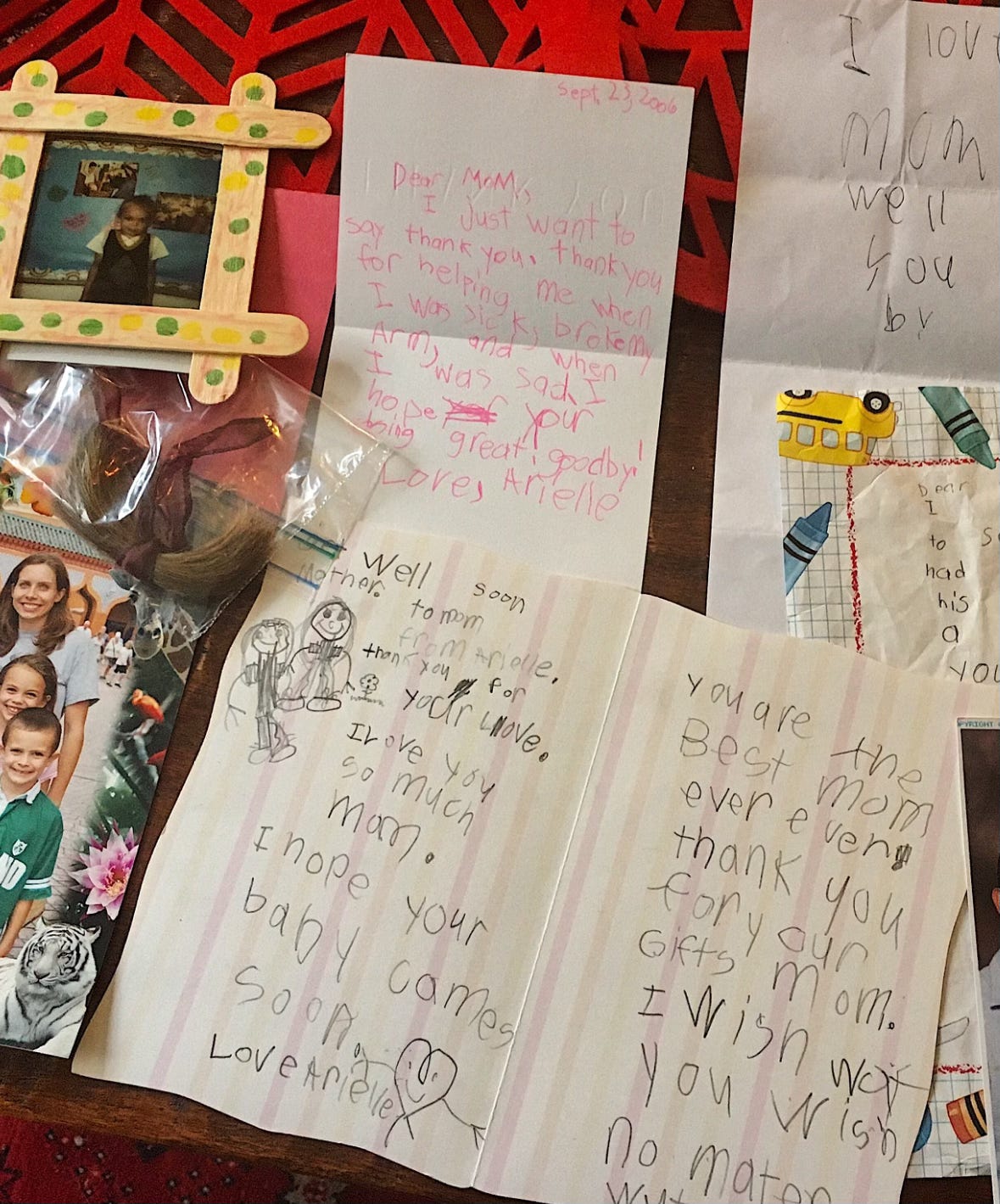
I believe her greatest work was motherhood. And I believe she was good at it.. that she loved her kids with everything she had, and that what took her was not a failure of love but a fire that exceeded what any one body could survive.
Andrea is not erased. Her light is not gone.
It moves through each of her children.. refracted, the way light bends through water and arrives somewhere unexpected, changed in form but undiminished in force.
Nouwen wrote that the wound that causes us to suffer can become the wound through which we offer something to others; not because the suffering was good, but because we did not let it make us disappear. I think about that when I think about this house, these children, this life. The wound was never mine alone. But neither was the staying.
This is how the story continues. From inside a life shaped by absence, held together by presence, written not in tally marks but in breath and rhythm.
My oldest reached out to me last week from inside the fog of new motherhood. She said it took two women. She is becoming the third.
My body does not keep the score. It keeps the story. The story of a woman who stayed.
And the story does not end with me. It moves forward.. into my daughter’s arms, into her house, into the particular way she holds her newborn son against her chest with one hand and steadies her older boy with the other, already fluent in the language of women who hold more than one thing at a time. It moves into the tender way she will one day sit beside her own child in the dark and say what I once said to her, what every woman in this line has said in her own way, across all the ordinary and devastating and unspeakably beautiful days:
I see you. I’m here. I’m not going anywhere.
Listening to that story without trying to make it neat, without asking it to resolve, without needing it to end anywhere other than exactly where it is … is the most faithful form of healing I have ever known.
About the Author
Welcome - I’m Kyle, the soul behind Sudden Journeys. I’m a writer, photographer, and founder of Sudden Journeys. I’ve spent the last few decades exploring: guiding travelers, leading tours, living abroad, and paying close attention to what landscapes, rooms, and encounters awaken in us. I write about place and belonging, hospitality and gathering, the practice of attention through journaling, and the home life between departures. Originally from a small town south of Nashville; I divide my time between the English countryside, London, and wherever the road takes me next.

Stay a While
If this piece resonated, you’ll find more long-form essays, reflections on journaling and home life, notes on gathering and hospitality, and lived travel writing here on Substack. Paid subscribers receive deeper essays, photography notes, and more intimate reflections.
Let’s Connect
Ask me a question, submit feedback or suggest a topic here.
💬 Come say hi on Instagram or LinkedIn
🎙️ On the Echoes of Elsewhere podcast, exploring place, migration, and belonging
📞 Have questions about travel? Book a travel planning consultation or email me at kyle@mysuddenjourneys.com
🪩 If you feel moved to like, comment, or share, it helps this work find its way to others who might need it.♥️
Thank you for trusting us with this breathtakingly beautiful, difficult story. Deep love and sorrow, and unflinching commitment. Sending love and prayers.
Thank you for sharing these beautiful words of your story. I feel I can understand my own story through them.