


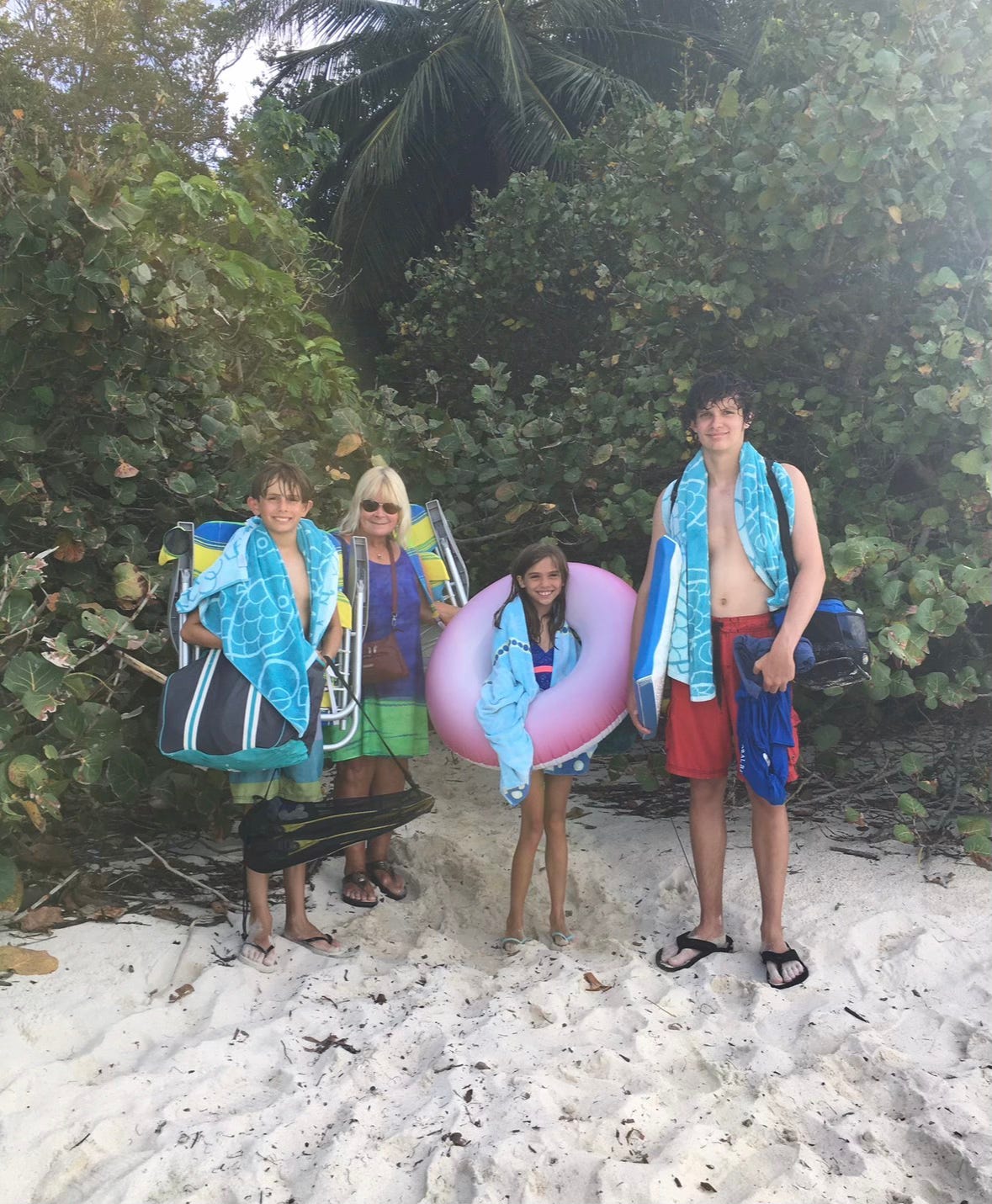
The last thing I saw before I turned toward the security line at Nashville Airport was my mother’s face. Her blue eyes, which were already the most noticeable thing about her (that and her smile) had gone almost translucent with crying. She was holding onto me, on to my sleeve not willing to let go up until the last moment of the security line. And then she let go.
I was 24 years old. I had a one-way ticket to Italy and a suitcase full of conviction. I didn’t have a return date and I didn’t really have a plan beyond language school. What I had was the kind of reckless certainty that only belongs to young people who haven’t yet learned what it costs to love someone who leaves.
My mother knew.
She never tried to stop me. She never told me the dream was too big or the distance too far or the risk too foolish. Instead, she stood there in the terminal with her bright blue eyes and she let me disappear into the crowd, and I cannot tell you what that must have taken, because I was not yet a mother. I was only a daughter, which meant I was only thinking of myself, I was only looking forward.
There is a line my mom once shared with me, something she’d heard somewhere and kept: The best thing you can give your children are roots and wings. She was good at the roots.
Our house was a house of rituals and rhythms, of seasonal transformation and predictable magic. She decorated for every holiday with an earnestness that bordered on theatrical. Easter brought pastel eggs and massive baskets. Valentine’s Day brought red hearts everywhere. Halloween meant homemade costumes, pumpkins and plastic masks of whatever character we wanted to be that year. And Christmas, of course, Christmas was the performance of a lifetime. We would come home from school and find the world transformed. This was the invisible labor of love taking on physical form.
She made our birthday cakes from scratch, themed and elaborate, the kind that required patience, way too much frosting and a full afternoon. This deserves its own paragraph, because my mother had three daughters whose birthdays all fell within a single week of each other. Three cakes. Three visions. Three daughters who wanted entirely different things. She was, to put it plainly, busy. And she did it anyway, year after year, without shortcut to which there was never a shortcut. There was only ever all the way.


It was easy to take her for granted. I say this not as a confession but as a fact about daughters, particularly oldest daughters who are building their identities in opposition to the very stability that made them brave enough to leave. She drove us to every practice, every performance, every lesson, every recital. She showed up. She was there. She was always there. And because she was always there, I did not yet understand that always is not the same as effortless.
I want to be honest about something, because this is not a love letter. Or rather, it is a love letter, but it is not only a love letter.
Like any story worth telling, ours has had its arcs and valleys. There has been tension between us, and grief, and heartache. There have been seasons of hurt and tears and the misunderstandings that happen when two people love each other from very different positions in life. I pushed my mother away more times than I care to count, and I did it with the specific hurt of a daughter who felt safe enough to be hurtful, which is its own twisted form of trust.
The saying goes that you don’t understand until you become a parent. I used to roll my eyes at that. I don’t anymore. I think of her now with a compassion that was not available to me at 14, or 24 or even 30 years old, a compassion that arrived only through the humbling education of trying to love children through their resistance and stubbornness.
Here is where the story folds in on itself, where the thru line bends and I have to hold two truths at once.
I did not give birth to my children.
My kids came into my life not through labor but through a choice, which has its own kind of contractions and its own moment of knowing that everything is about to change and you cannot go back. Parenting children I didn’t carry and now watching the oldest of my kids; my daughter become a mother has been the most complex emotional territory I’ve ever occupied. It has been a form of grace and healing. And it’s been an act of repair and courage that I did not know I needed until I was already inside it.


Hope Edelman wrote that a daughter who loses the consistent, supportive family system her mother provided must then develop her confidence and self-worth through other means, that without a mother or mother-figure to guide her, she has to piece together a female self-image on her own. I think about this often, not because I lost my mother, but because I understand that mothering is not a single inheritance but more like a patchwork. It is what you were given and what you weren’t, what you chose and what chose you, what you watched your own mother survive and what you had to figure out in the dark.
Esther Perel once said that loss becomes easier to carry when our grief finds a purpose larger than our own story. I think about this in relation to Arielle, my oldest, who became a mother herself, and how watching her step into that role has been the kind of purpose that rearranges everything. It is not what every woman needs, I know that. But for her, I believe it has been a form of mending, the slow, daily work of tending to something alive and dependent and yours. And yes, heartbreak too. The two are not mutually exclusive. They rarely are.


People say things to me sometimes that I know are meant with kindness but land sideways. Those kids are so lucky to have you. Or, What would they have done without you? It was never one direction. It was always mutual, a decision made between five people, a family built not from obligation but from choosing. They changed my life as much as I changed theirs. More, probably. They taught me that love does not require a biological claim, that belonging is something you build with your hands, every day, in small ordinary acts of showing up.
When I was born in 1979, I almost didn’t survive. I was my parent’s first child. I arrived early, a premature baby in a decade when the technology for keeping small bodies alive was less certain than it is now. My mom could not hold me for the first 21 days. For three weeks, I lay in an incubator while she went home with empty arms, her body recovering from a pregnancy complicated by toxemia, her mind somewhere between the hospital and the terror of what might happen next. My dad went back to work because that is what men did. And my mom sick and frightened, waited alone.


The stories she has told me about those weeks makes my heart ache for the young mother she was. Her body on one floor. My body fighting for breath in a glass box on another. My dad could have lost us both.
I did not know, for most of my life, that this beginning had anything to do with what came after. From a young age, I struggled with depression, a shadow that would descend without warning or reason, something shapeless and relentless that I could not outrun. I was told, in various ways over many years, that it was something I should be able to manage, to think my way out of, to fix. That it was, somehow, my fault.
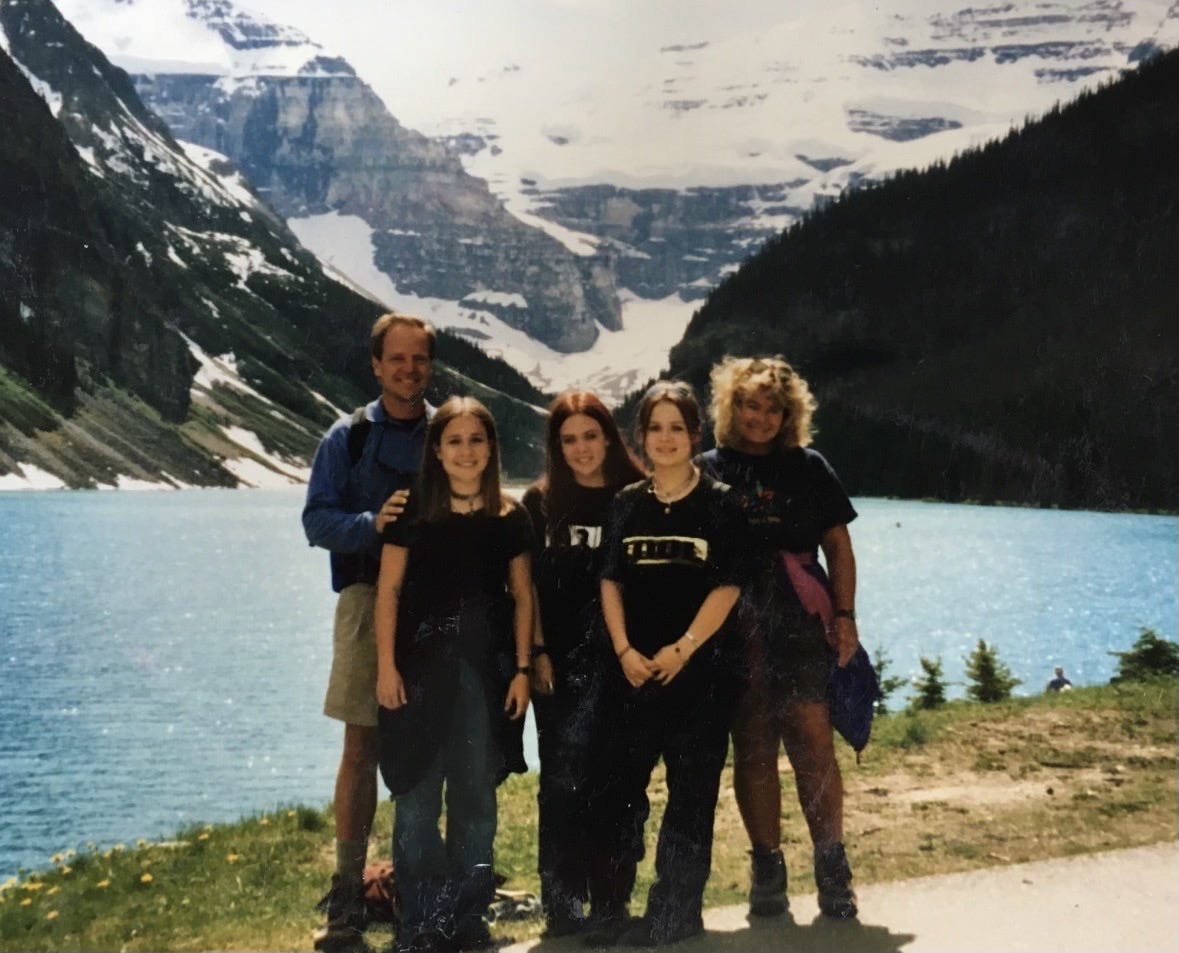
It was only a few years ago, working with a functional health practitioner, that I learned something that changed the way I understood my own life. During vaginal birth, a baby passes through the birth canal and receives the mother’s microbiome, the bacterial ecosystem that seeds the gut and, as research increasingly shows, profoundly influences mental health. Babies born by cesarean section do not receive this transfer when I was born (they do now). Studies have found that children born by C-section show higher vulnerability to anxiety and depression, that the disruption to their early microbial development may follow them for years.
This was a lightbulb moment. This helped to reframe (not erase) the story I had been telling myself for decades. This thing I had carried, this weight I had been told was a personal failing, had roots in something that happened before I could form a single memory. It wasn’t my fault. It had never been my fault. But I still had to fight through it, and so did my mother, who spent three weeks wondering if her daughter would breathe.


I’ve been learning, slowly, about my mother’s mother, my grandmother. My mom describes her as someone who was around but not present, a woman who did not seem to enjoy mothering, who gave what she could from a well that had not been filled for her. It is hard to give from a place where you were not given. I know this. I have lived versions of this.
And yet my mother gave so much.
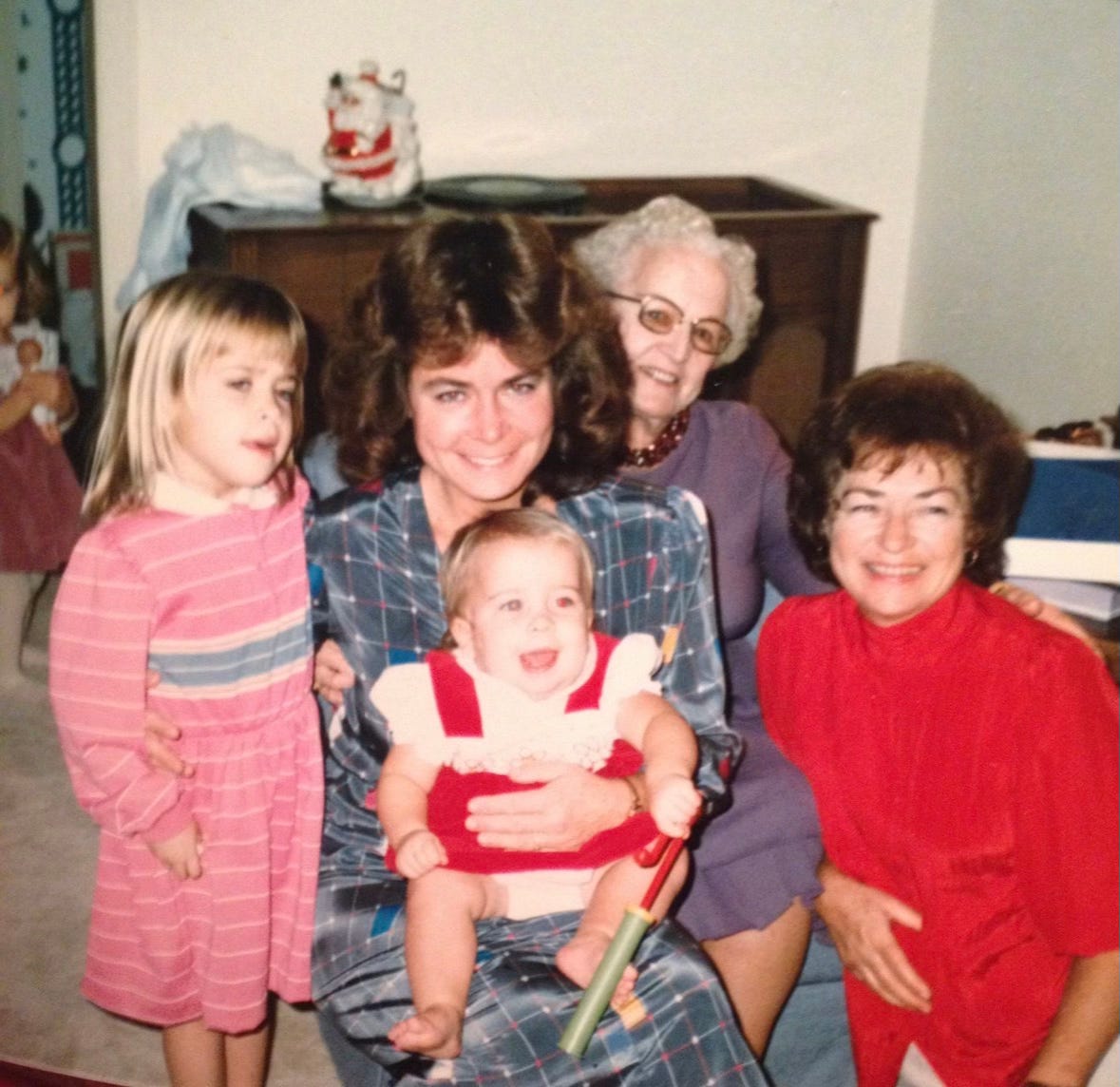
She took what she had not received and decided, somewhere in the determination of her own becoming, to build something different. The rituals, the cakes, the decorated houses, the driving, the showing up, all of it was an act of will as much as love. She created the home she wanted her daughters to have, not the home she’d had. Andi Ashworth once wrote that home is where we learn that love shows itself in the details, and my mother was fluent in the details. That is its own kind of courage, the kind no one gives you a prize for because it looks, from the outside, like it comes naturally.
I wouldn’t be the mother I am today if it weren’t for how she loved me. And the way I love my kids is shaping something I can see but not yet fully measure. And the way my oldest daughter loves her three boys carries the echo of my mother’s birthday cakes and Halloween transformations and blue-eyed airport goodbyes, even if she doesn’t know it yet. The thru line is there. It runs beneath everything, quiet and persistent, like water finding its way through stone.


I go back to that day at the Nashville airport. I was 24, and I was only looking at the at the life I was certain was waiting for me in a country where I didn’t yet speak the language. And my mother was standing behind me, watching me walk away, her blue eyes bright and wet and full of the one thing I didn’t understand yet.
Courage.
Not the courage of going… the courage of staying. The courage of standing still while the person you love and almost lost those first 3 weeks of life… turns her back and disappears into a crowd, and you do not chase her, you do not call her name, you do not say come home. You just stand there, in the fluorescent light of an airport terminal, and you let her go. Because you gave her roots deep enough to come back, and wings strong enough to fly. And you trust, with everything you have, that both will hold.
And they did. More than ever.


She gave me the heart of hospitality, the belief that no one is a stranger. She gave me the rhythms and traditions that hold a family together in the aftermath of whatever comes. She gave me, without knowing it, the blueprint for everything I would later build, every table I would set for people I hadn’t yet met, every door I would open, every gathering where I would look across a room and think: this is what she taught me. This is what it means to make people feel like they belong. Open your arms, your home and your heart.
Happy Mother’s Day, Mom. I love you! Here’s to roots and wings.
To you, and to every woman doing the brave, complex, imperfect, extraordinary work of loving children, the ones she carried and the ones who carried her.
It was never one way. It never is.
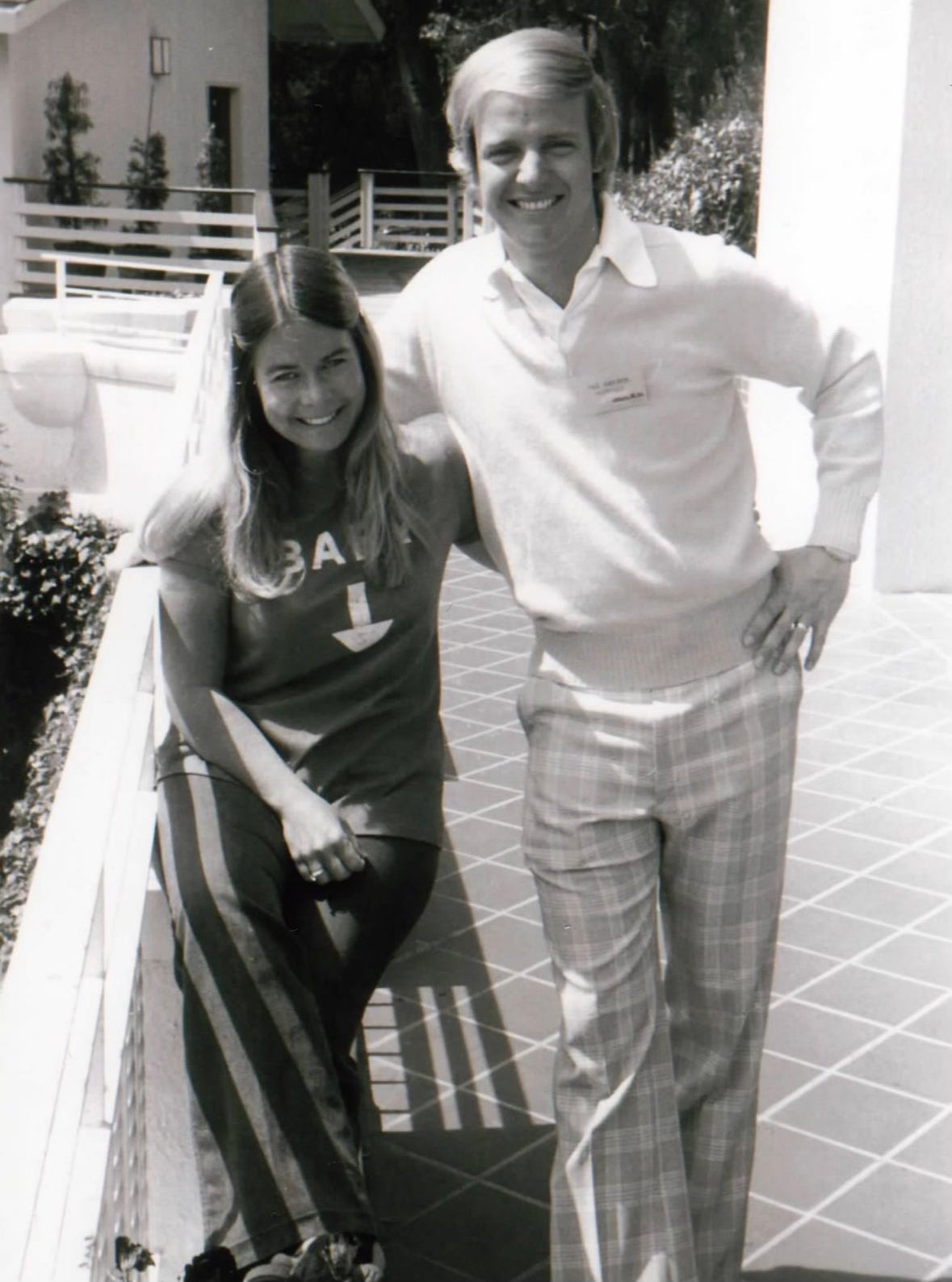
My mother loves berries, meringue, and buttercream frosting and white cake. So I’m sharing a cake that holds all of those things together. Two layers of moist vanilla cake with a layer of crisp meringue discs smeared with strawberry jam, layered with billows of whipped swiss meringue buttercream and a tumble of summer berries… scattered with fresh blackberries, raspberries, blueberries crowned with whatever looks most beautiful. It’s called a Summer Berry Meringue Cake.
Summer Berry Meringue Cake
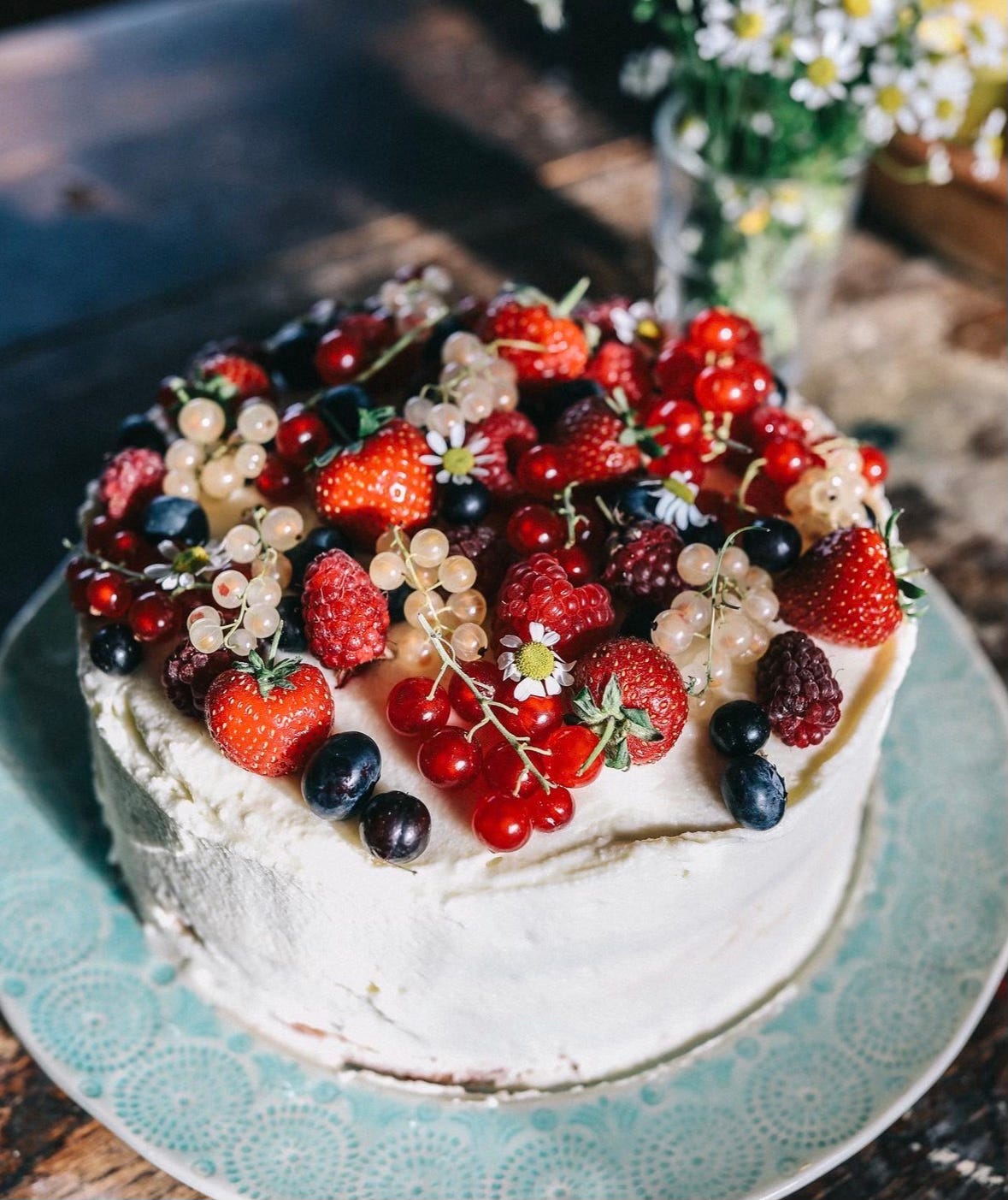
Vanilla Cake Ingredients
2 cups cake flour (280 g)
1 teaspoon salt
2 1/2 teaspoon baking powder
1/4 teaspoon baking soda
4 egg whites
2 sticks of butter (226 g) - room temperature
1 1/4 cups sugar (280 g)
2 tsp vanilla
1 cup milk room temperature
1/2 cup sour cream (125 g) room temperature
Instructions
Preheat oven to 350°F/177°C. Butter and flour three 6 inch cake tins and line with parchment paper.
Combine all the dry ingredients (cake flour, salt, baking powder and baking soda) in a medium bowl, whisk together and set aside.
In a small bowl, mix the milk, sour cream and vanilla together. Set aside.
Using a handheld or stand mixer with the paddle attachment, beat the butter and sugar on medium speed (4) for about 3 minutes until smooth and creamy. Scrape down the sides of the bowl with a spatula.
Whisk the egg whites together with a fork and slowly drizzle the egg whites into the mixture. Keep it on low speed until all the egg whites are added and then increase the speed to high for about 1-2 minutes until combined. (May look curdled but it will smooth out as you beat). Scrape down the sides of the bowl.
On low speed, add half of the dry ingredients and mix until barely incorporated. Then add half of the milk mixture and mix for a few seconds. Then add the remaining dry ingredients mixing for a few seconds and then add the remaining milk mixture. Turn off the mixer and mix it by hand with a rubber spatula to make sure the batter is combined. Do not overmix the batter.
Pour the batter evenly into the pans (about a third of the way full). Bake for about 30-35 minutes until the cakes are cooked. Insert a toothpick into the center of the cake, if it comes out clean then it’s done.
Allow cakes to cool completely (15-20 minutes) and then gently remove the cakes from the pans and allow them to rest on a wire rack.
Swiss Meringue Buttercream
Equipment
Saucepan
Bowl
Candy thermometer
Stand mixer with a whisk attachment (or a hand mixer)
Rubber spatula
Ingredients
5 small to medium eggs (150 g) Egg whites
1 1/8 cups (225 g) Granulated sugar
4 US sticks (453 g) Unsalted butter softened
Instructions
Preparation: Separate eggs. Prepare hot, simmering water for the double boiler. Ensure all the tools and ingredients are dry and clean.
Enemies of fluffy meringue: Oil, liquids, or any residue prevent the egg white from whipping well to make stiff meringue. Egg yolks contain oil, so separate them carefully.
Heat egg white and sugar: Add the egg whites and sugar to a large bowl and whisk them together. Heat it over a water bath, mixing constantly, until it reaches 160°F (71°C).
3 Tips for heating them successfully:
1. Ensure that the bowl is not touching the hot water directly, so the eggs are not getting cooked with extreme heat.
2. Mix constantly and evenly to prevent the egg whites from getting cooked partially. We tend to miss the spot around the edges of a bowl. This is the most time-consuming part; the rest is relatively easy. Keep going!
3. Use a candy thermometer to ensure the temperature is accurate. The sugar granules shouldn’t feel grainy when you touch and rub them with your fingers.
5 small to medium eggs Egg whites, 1 1/8 cups Granulated sugar
Whip the heated egg whites and sugar: Pour them into the bowl of a stand mixer and immediately start whipping at high speed with a whisk attachment.
Don’t forget to wipe off the excess water under the bottom of the bowl before pouring, so it doesn’t get into the bowl of a stand mixer, as the liquid makes the meringue looser.
Continue whipping: Touch the bottom of a bowl or meringue and check. Turn it down to medium speed once it feels comfortably warm. Turn it down to low speed when it feels gently warm.
Stop whipping it when it’s cooled to your body temperature - not cold but cooled with a touch or warmth. The finished meringue should appear stiff yet elastic and smooth. The tips should curl up when lifting it with a whisk.
4 Important tips for whipping the meringue:
1. Egg whites whip up A LOT more when the temperature is high. Once it reaches 160°F (71°C), don’t wait; start whipping immediately!
2. Stop whipping the meringue when it’s cooled to room temperature. The meringue slowly starts losing volume when it’s over-mixed.
3. Ensure the meringue is not warm or cold. Butter melts when it’s added to warm meringue.
4. When making Swiss buttercream with a hand mixer, you’ll need to constantly whip the meringue with your hands, which requires more work, but all the same tips apply. I recommend using a stand mixer if you have one.
Add butter to the meringue and whip: Add all the room-temperature butter and whip at medium speed until blended. Clean the bottom and sides of the bowl, and whisk as you go to ensure everything is incorporated evenly. You can add all the butter at once or divide it into two portions if you prefer. There is no need to add it little by little with this recipe.
As an option, whip it at low speed for a few minutes at the end to eliminate some large air holes.
It is not necessary to whip a lot because the buttercream is already fluffy, thanks to the cloud-like meringue. You can stop as soon as the meringue is evenly incorporated. Whip it for a longer time if you prefer a slightly more airy texture.
The firmness of the butter is the key:
The firmness or temperature of the butter is crucial for combining meringue and butter beautifully. Always use softened butter at room temperature.
4 US sticks Unsalted butter
Notes
How to store it: Store the buttercream in an airtight container. One batch of the buttercream fills a 32-oz container. I also like to store it with plastic wrap, as I can cut the edge, insert it in a piping bag, and pipe it right away.
In the refrigerator: Up to 5 days
In the freezer: For a few months
Meringue Layer
3 large egg whites
1 teaspoon vanilla extract
¾ cup + 2 tablespoons sugar
Instructions
Line a baking sheet with parchment paper and preheat the oven to 285ºF (140ºC).
Beat the egg whites and vanilla in a large bowl until stiff peaks form.
Add the sugar, 1 tablespoon at a time, continuously beating, until the meringue is smooth and glossy.
Spread the meringue on the parchment-lined sheet. Gently flatten across the sheet pan in a round disc, enough to cover your cake size.
Bake the meringue for about 1 hour and 15 minutes (for softer meringue, reduce the bake time by 15 minutes).
Let the meringue cool in the oven with the door propped slightly open for a couple of hours before removing to a cooling tray.
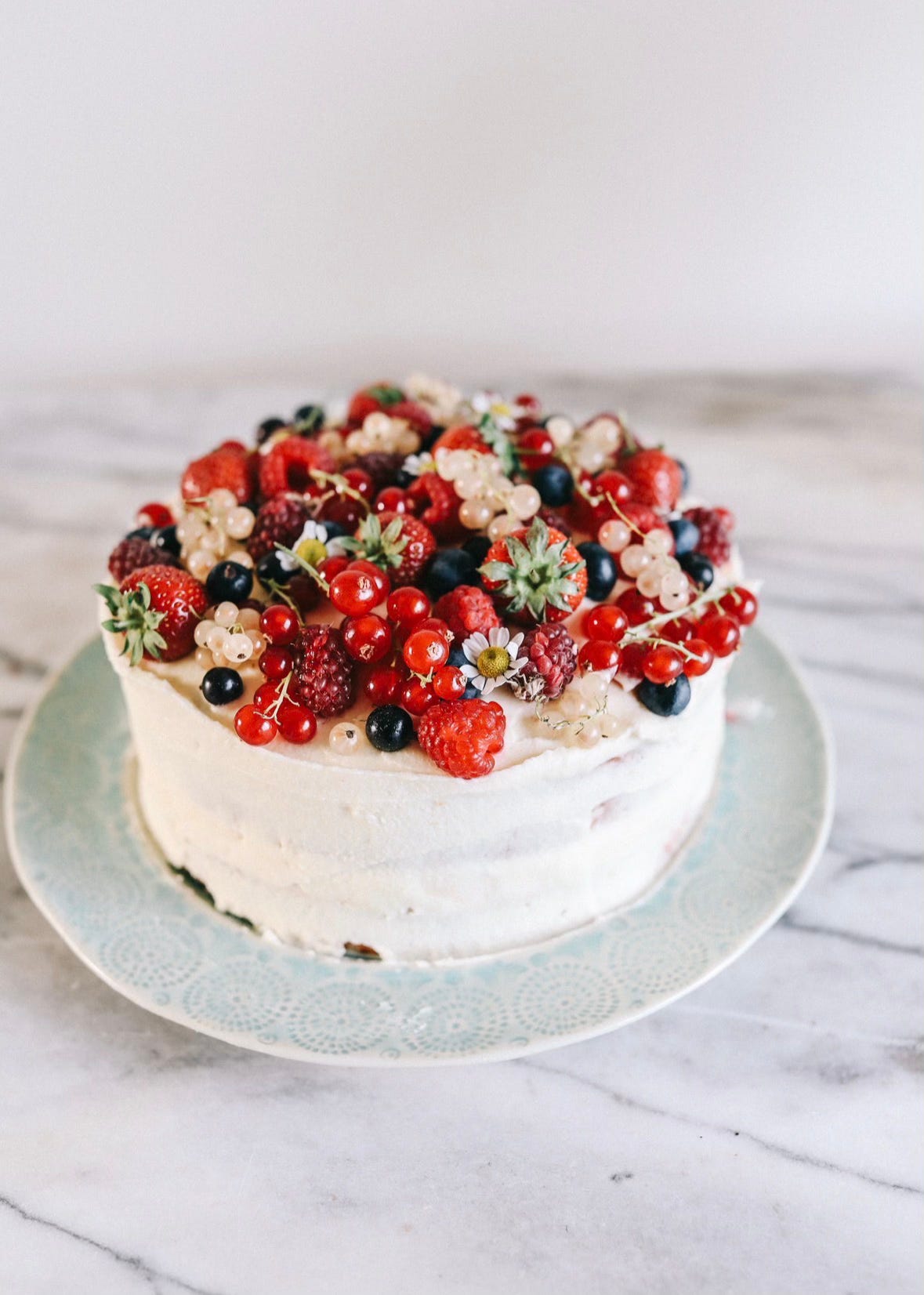
Topping
fresh strawberries, hulled and sliced
fresh raspberries
fresh blueberries or any other berries you want
Strawberry Jam
Assemble
Assemble the first layer: Take the first cake and spoon roughly one-third of the cream on top, then layer with the meringue disc and spread with strawberry or raspberry jam.
Add the second layer: Top with the second layer of cake and repeat with another third of the buttercream. And finally cover the and smooth out the sides of the cake.
Crown it and serve: Top and decorate with the remaining berries and edible flowers if you like.
About the Author
Welcome - I’m Kyle, the soul behind Sudden Journeys. I’m a writer, photographer, and founder of Sudden Journeys. I’ve spent the last few decades exploring: guiding travelers, leading tours, living abroad, and paying close attention to what landscapes, rooms, and encounters awaken in us. I write about place and belonging, hospitality and gathering, the practice of attention through journaling, and the home life between departures. Originally from a small town south of Nashville; I divide my time between the English countryside, London, and wherever the road takes me next.

Stay a While
If this piece resonated, you’ll find more long-form essays, reflections on journaling and home life, notes on gathering and hospitality, and lived travel writing here on Substack. Paid subscribers receive deeper essays, photography notes, and more intimate reflections.
Let’s Connect
Ask me a question, submit feedback or suggest a topic here.
💬 Come say hi on Instagram or LinkedIn
🎙️ On the Echoes of Elsewhere podcast, exploring place, migration, and belonging
📞 Have questions about travel? Book a travel planning consultation or email me at kyle@mysuddenjourneys.com
🪩 If you feel moved to like, comment, or share, it helps this work find its way to others who might need it.♥️
Happy Mother’s Day Kyle!